Philosophy
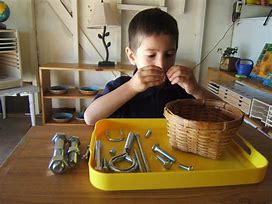
The Montessori philosophy is one that is dominated by individual self-guided activity which comes from a child-centred approach (Borrelbach, 2009). Many would say that in terms of her philosophical views Montessori was a subjective idealist. As a strong advocate of vitalism, she acknowledged the idea of an immutable life force. However, due to her medical training she was a robust advocate of the hands-on experimental method (Plekhanov, 1992). Montessori had a solid focus on the Nature of the child, but this focus could be in error as it is not nature that shapes the human personality but rather nurture, whereas nature shapes the physical child themselves (Rutter, 2006). The child’s personality is shaped by both significant adults and the social conditions in which the child finds themselves (Plekhanov, 1992). It is strongly believed that without social interaction and an opportunity for the child to assimilate social norms they will struggle to develop an individual personality and therefore be unable to become a thinking being (Plekhanov, 1992; Rutter, 2006).
This philosophical way of thinking had a profound impact on Montessori. While she was an avid advocate for children having freedom to explore their world she argued that this should not come at a cost of the child becoming neglected by the adults in their world (Montessori, 1995). She goes on to explain that to her ‘freedom’ simply means that the child is not only taught how to see both true and false, but also learns that both have a value in society. Montessori separates the outward ‘freedom’ stating that all beings are internally free regardless of the current social rights (or lack of) they might experience (Montessori, 1997).
Maria Montessori saw children as being workers who turn themselves into rational people through their shaping of personality with the help of both adults and a self-concept of self-upbringing and self-instruction (Plekhanov, 1992).
Pedagogical Experiences
There is a definite medical model to the pedagogical beliefs of Montessori. Teacher observations are based on forms of written anthropometrical data that was designed by Montessori herself. Children are weighed and height is taken at prescribed intervals to ensure they are experiencing optimal physical growth along with regular yearly medical checks to ensure the health of the child, usually on the day of the child’s birthday (Montessori, 2013).
Montessori focuses on the concepts of discipline, independence, taking away external rewards and punishments, and liberty. Discipline focuses not on punishment but rather on the ideas of good and evil and that there is order to everything (Montessori & Holmes, 1912). Children are taught to modify their behaviour in appropriate ways to become part of this order while still maintaining freedom. Montessori believed that by the age of three a child should be able to become an independent entity capable of interacting with their environment at all levels to a degree that they no longer needed adult help (Montessori, 2013). To a Montessori child engaged in their work, their work becomes its own reward, while another child who may be upset or disruptive in the environment is not punished by removal of the activities but rather moved to an area where they can observe the other children while the disruptive child works on their activities. It is believed that this observation shows the disruptive child not only how to behave in a similar manner as modelled by the children but also allows them time to calm and discipline or refocus themselves (Montessori, 1995). The pedagogical concept of Liberty in the Montessori classroom is one in which the child becomes free to develop their entire personality rather than just some aspects of their personality (Montessori, 2013).
Many of the concepts of pedagogy Montessori followed such as De Vries concept of Mutation played a part in the development of her pedagogical understanding of not just how children learn but also how teachers should teach (M. Montessori, 1966).
Setting
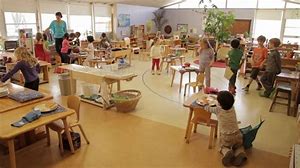
The setting of a Montessori classroom environment has similarities with the New Zealand Kindergarten Association. Both settings have a mix of indoor and outdoor room for children to play and both have line of sight between the two. They also both provide equipment in age appropriate sizes. They also have similar underlying philosophies however; this is where the similarities end.
In 1915 Maria Montessori was a doctor working in an Italian hospital with young children who had been given to the state by their parents due to the fact the children had underlying medical and mental issues. (Montessori, 1949; M. M. Montessori, 1966). Observing these children Montessori realised that the environment around them played a part in how the children interacted with their world and set out to change this. The school classroom the children used in the hospital was gutted completely and it was structurally modified to allow the children access to the outside environment and gardens.
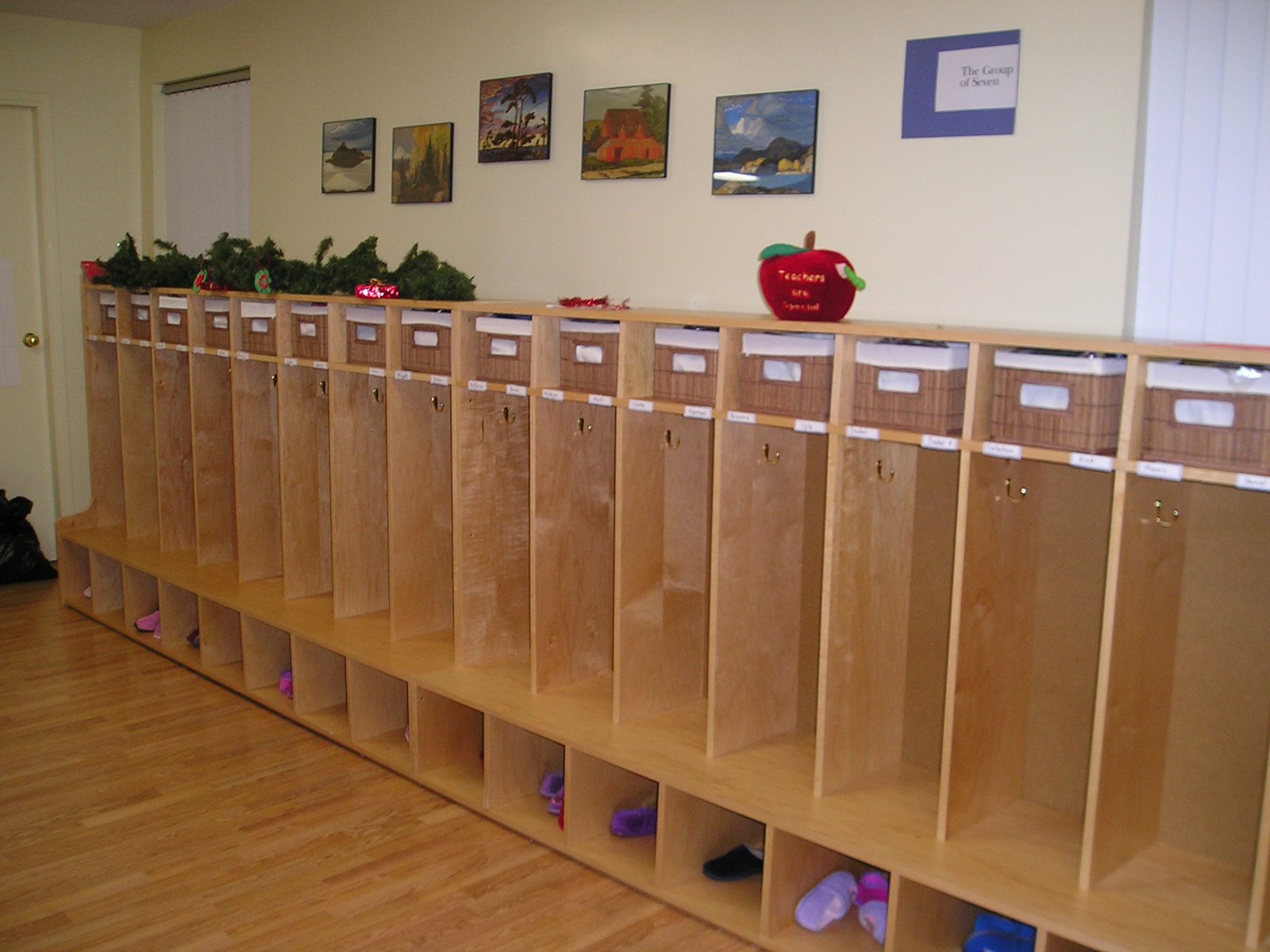
The traditional classroom set up of desks and benches or wooden chairs in rows was abolished and new tables were provided that encouraged small group work in twos and threes, along with smaller tables for individual work. These were built to be both functional and light so that children could move their environment around at will (Al et al., 2012; NAMC, 2007). Armchairs and other comfortable chairs were placed around the room to give children comfortable places to visually engage in the environment from. The traditional teacher’s desk has been replaced in this environment by a help desk, teacher station, or inquiry counter (Al, Sari, & Kahya, 2012).
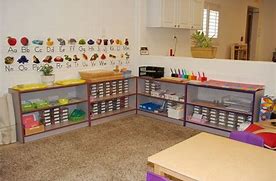
Child height cupboards open to provide access to materials for learning, while each classroom is provided with a handbasin at child height along with the necessary tools to carry out the activity of handwashing (NAMC, 2007). The tops of the cupboards are adorned with plants, aquariums and free play toys. The rooms are adorned with attractive master works that encourage an interest in beauty in all its forms (Montessori, 2013).
Roles of the Children, Teachers, Parents and Community
The teacher is seen as an observer (Montessori, 1997). It is a sharing of power and responsibility with the teacher removing themselves as the centre of attention. This decentralization removes the teacher from the role of privilege. They are no longer seen as an absolute authority on everything academic but rather as a co-constructor of knowledge alongside the child (Montessori, 1995; Montessori & Holmes, 1912; Ültanır, 2012).
In the classroom children are freed to make choices, but not just any choices. Rather they are encouraged to make the right choice of activity (Rathunde, 2001). This freedom is limited in the classroom through necessity due to resources. Thus concepts such as taking turns and not disturbing others come into play along with putting things back where they belong, and the child’s readiness both cognitively and physically for some of the concepts being facilitated (Rathunde, 2001).
Parents not only take on roles as observers and caregivers but they play a large role in the wider school community (Kids Collective, 2015). These events provide the groundwork for experience and knowledge sharing, ensuring the parents are kept up to date on the achievement and efforts of the children (Kids Collective, 2015).
The role of the wider community is seen as pivotal to Montessori learning. Families come from a wide range of backgrounds and locations. Therefore, the local community is asked to become involved in activities such as fundraising, working bees, and helping in the classroom setting (Southside Montessori, 2019).
References
Al, S., Sari, R. M., & Kahya, N. C. (2012). A different perspective on education: Montessori and Montessori school architecture. Procedia-Social and Behavioral Sciences, 46, 1866-1871.
Borrelbach, S. (2009). The historical development of school buildings in Germany. R. Walden.
Kids Collective. (2015). Montessori Education: Parents Role. Retrieved from http://kids-collective.com/blog/montessori-education-parents-role/
Montessori, M. (1949). Formazione dell’uomo: Garzanti (IS).
Montessori, M. (1966). The secret ofchildhood. In: Notre Dame: Fides Publishers.
Montessori, M. (1995). The absorbent mind (Rev. ed.). Ney York: Henry Holt.
Montessori, M. (1997). Basic ideas of Montessori’s educational theory: extracts from Maria Montessori’s writings and teachings: Clio Press.
Montessori, M. (2013). The montessori method: Transaction publishers.
Montessori, M., & Holmes, H. W. (1912). The Montessori Method: Scientific Pedagogy as Applied to Child Education in” The Children’s Houses”: Frederick A. Stokes Company.
Montessori, M. M. (1966). The human tendencies and Montessori education: Association Montessori Internationale.
Murray, A. (2012). Montessori Education. Montessori Life.
NAMC. (2007). Montessori Prepared Environment: Purpose, Set-up and Classroom features.
Plekhanov, A. (1992). The pedagogical theory and practice of Maria Montessori. Russian Social Science Review, 33(4), 79-92.
Polk Lillard, P. (1972). Montessori: a modern approach. NY: Schocken Books.
Rathunde, K. (2001). Montessori education and optimal experience: A framework for new research. NAMTA JOURNAL, 26(1), 11-44.
Rutter, M. (2006). Genes and behavior: Nature-nurture interplay explained: Blackwell Publishing.
Southside Montessori. (2019). Community. Retrieved from https://www.southsidemontessori.edu.au/community.html
Stoll Lillard, A. (2005). Montessori: The science behind the genius. New York.
Ültanır, E. (2012). An epistemological glance at the constructivist approach: Constructivist learning in Dewey, Piaget, and Montessori. International Journal of Instruction, 5(2).

